When an IT team reaches out to us with a list of servers to sell, the first question is always the same: "What are these actually worth?" Two servers with the same chassis can have wildly different resale values depending on what is inside them and what the secondary market looks like at that moment.
Understanding what drives used server value helps you make smarter decisions about when to sell and how to set realistic expectations. Here is what enterprise buyers actually evaluate when pricing your equipment.
CPU Generation: The Single Biggest Factor
Nothing affects resale value more than the processor generation. The CPU determines not just raw performance but also the platform's support for current memory standards, PCIe lane counts, and security features that enterprise buyers require.
Here is the Intel Xeon Scalable hierarchy as of early 2026, from highest to lowest resale value:
- 5th Gen (Emerald Rapids) — The current flagship. Servers with these processors hold premium value and sell quickly. Think Xeon 8500 and 6500 series.
- 4th Gen (Sapphire Rapids) — Still in strong demand. Xeon 8400/6400/5400/4400 series processors are highly sought after, especially in dual-socket configurations.
- 3rd Gen (Ice Lake) — This is the sweet spot of the used market right now. Xeon 8300/6300/5300 series servers offer excellent performance-per-dollar for buyers, which means healthy resale values for sellers.
- 2nd Gen (Cascade Lake) — Still usable and in moderate demand, but values are declining steadily. Xeon Gold 6200 and Platinum 8200 series.
- 1st Gen (Skylake) — Nearing the end of their useful secondary market life. Xeon Gold 6100 and Platinum 8100 series servers sell for a fraction of their original cost.
- Pre-Scalable (v3/v4) — Haswell and Broadwell Xeon E5 v3 and v4 processors. These still move, but at commodity-level pricing. The market is saturated with them.
The gap between generations is significant. A Dell PowerEdge R650 with dual Xeon Gold 6330 processors (Ice Lake) might be worth three to four times as much as an R640 with dual Xeon Gold 6130 processors (Skylake), even though both are single-generation-apart 1U rack servers from the same manufacturer.
On the AMD side, EPYC processors follow a similar pattern. EPYC 9004 (Genoa) and 8004 (Siena) command top dollar. EPYC 7003 (Milan) holds strong. EPYC 7002 (Rome) is declining. EPYC 7001 (Naples) is nearly at end of life.
Why Generation Matters So Much
Enterprise buyers purchasing used servers are not just looking for "enough performance." They need platforms that will be supported by their OS vendor, hypervisor, and application stack for the next three to five years. A server with aging processors may not support the latest VMware ESXi release, may lack critical security mitigations, and may not be eligible for hardware support contracts. That eliminates a huge portion of the buyer pool.
RAM: Type, Speed, and Capacity
After the CPU, memory configuration is the second most important value driver. Several factors come into play.
DDR generation. DDR5 memory commands a significant premium over DDR4. Servers that support DDR5 (4th Gen Intel and newer, EPYC Genoa and newer) are worth more partly because of the memory itself. Individual DDR5 DIMMs also have strong standalone resale value.
Capacity per DIMM. 64GB DIMMs are the current sweet spot for resale. 128GB DIMMs carry a premium. 32GB DIMMs are common and sell at moderate prices. 16GB and 8GB DIMMs have minimal individual value but contribute to overall system pricing.
Total installed capacity. A server with 512GB or more of RAM is worth disproportionately more than one with 128GB, because the memory itself often represents the majority of the system's resale value. In many cases, the installed RAM is worth more than the rest of the server combined.
Speed and rank. 3200MT/s DIMMs are worth more than 2666MT/s or 2400MT/s of the same capacity. Dual-rank versus single-rank matters less to most buyers but can affect pricing at the margins.
If you are considering pulling RAM to sell separately, think carefully. A fully populated server typically sells for more than a bare server plus loose DIMMs, because buyers prefer turnkey systems. However, if you have a mix of well-configured and poorly-configured servers, consolidating memory into fewer, better-populated systems before sale can increase total recovery.
Wondering What Your Servers Are Worth?
Send us your equipment list and get a detailed, no-obligation quote within 24 hours.
Get a QuoteStorage: NVMe, SAS, and SATA
Drive configuration affects value in two ways: the drives themselves have resale value, and the drive configuration affects the server's appeal to buyers.
NVMe SSDs are the most valuable. Enterprise NVMe drives from Intel (now Solidigm), Samsung, Micron, and Kioxia hold their value well, especially in higher capacities (3.84TB and above). A server loaded with NVMe drives can have significant value in the storage alone.
SAS SSDs remain in demand, particularly 12Gbps SAS drives in the 800GB to 3.84TB range. These are the workhorse drives of the enterprise storage market, and there is steady demand for replacements and expansions.
SAS HDDs have modest resale value. 10K and 15K RPM SAS drives in 2.5-inch form factors are still used in transactional workloads. Large-capacity 3.5-inch SAS drives (12TB and above) hold value for bulk storage use cases.
SATA drives have the lowest resale value and in many cases are not worth selling individually. SATA SSDs have some value; SATA HDDs in enterprise servers rarely justify the logistics of individual sale.
A note on drives and data security: If you are selling to a reputable direct buyer, the answer is usually to leave the drives installed. The buyer handles data destruction with documented, compliant processes. Pulling drives adds labor on your end and reduces the server's value. That said, if your security policy requires on-site destruction, that is always the right call, even if it reduces the sale price.
Chassis and Form Factor
The physical server platform matters more than most sellers expect.
1U rack servers (Dell R650/R660, HPE DL360, Lenovo SR630) are the highest-volume sellers in the secondary market. They are versatile, space-efficient, and fit the widest range of buyer use cases.
2U rack servers (Dell R750/R760, HPE DL380, Lenovo SR650) are nearly as popular and often command slightly higher prices because they support more drives, more PCIe expansion, and higher power configurations.
4-socket servers are a niche market. They sell, but to a much smaller buyer pool. Pricing is less predictable.
Blade servers (Dell M-series, HPE BladeSystem) have limited secondary market appeal unless sold as complete enclosures with blades. Individual blades without an enclosure are difficult to move.
GPU servers are a category unto themselves. Systems configured for AI and ML workloads with NVIDIA A100, H100, or L40S GPUs are in extremely high demand. The GPU value often dwarfs the server itself.
OEM Brand and Model Line
Brand does affect resale value, though perhaps not as dramatically as sellers might expect.
Dell PowerEdge servers consistently command the strongest resale prices. Dell's dominant market share means more buyers are familiar with the platform and more compatible parts are available. The R640, R740xd, R650, and R750xa are among the most liquid used servers on the market.
HPE ProLiant servers sell well, particularly the DL360 and DL380 lines. Resale values are typically close to Dell equivalents, though the buyer pool is slightly smaller.
Lenovo ThinkSystem servers are gaining secondary market share but still trail Dell and HPE in resale value, largely a function of market familiarity rather than quality.
Supermicro systems sell at a discount compared to Tier 1 OEMs. The secondary market for Supermicro tends to be dominated by homelabbers and small businesses.
Cisco UCS servers hold value well within Cisco-centric environments but are less liquid in the general secondary market due to their tight integration with Cisco's management stack.
Lifecycle Status and Support Availability
Where a server sits in its product lifecycle directly impacts resale value. Once a server reaches end-of-support-life, its value drops sharply. Enterprise buyers who need vendor support contracts simply cannot use unsupported hardware, which eliminates a huge portion of the buyer pool.
Cisco maintains a comprehensive end-of-life listing that illustrates how lifecycle announcements affect equipment value. Dell and HPE publish similar lifecycle information.
Every month a server sits in storage after decommissioning, it moves closer to an EoL announcement that could cut its value by 30-50% overnight. We cover timing strategy in detail in our guide on the best time to sell data center equipment.
Cosmetic Condition and Completeness
Physical condition matters, but less than most sellers fear. Enterprise buyers expect minor scratches, dust, and label residue. None of that significantly affects pricing. What does matter:
- Missing components. Servers without drive trays, bezels, rack rails, or power supplies are worth less. Rails are frequently lost during decommission and cost $50-$150 to replace, which buyers will deduct.
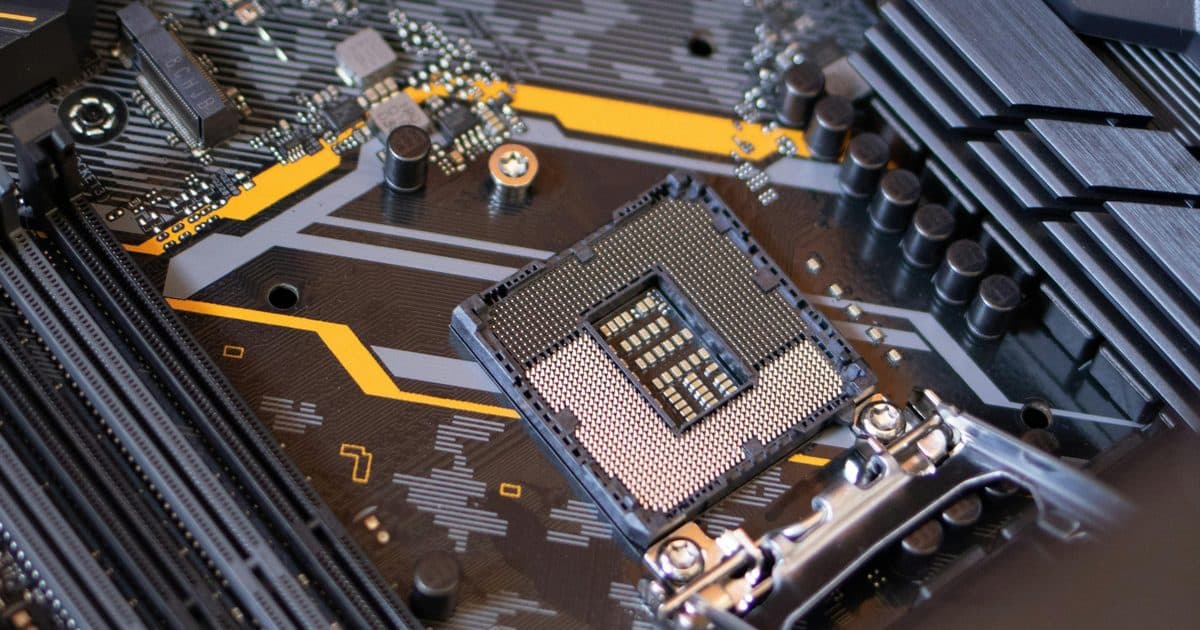
- Damage to connectors or backplanes. Bent CPU socket pins, damaged backplanes, or non-functional management ports can reduce value substantially or make a server unsellable.
- Non-functional state. A server that powers on and passes POST is worth significantly more than one sold "as-is, untested."
Market Timing and External Factors
Even with identical hardware, the same server can be worth different amounts depending on when you sell it. Technology transitions like DDR4 to DDR5, PCIe Gen 4 to Gen 5, and networking shifts from 10GbE to 25GbE all create windows where older equipment loses value rapidly.
For a deeper look at how timing affects your recovery, read our guide on when to sell data center equipment for maximum value.
How to Maximize Your Server's Resale Value
Based on everything above, here are the practical steps you can take to get the best possible price for your used servers:
-
Sell sooner, not later. Depreciation in the secondary market is relentless. A server's resale value declines every quarter, and EoL announcements can cause sudden drops.
-
Keep servers complete. Do not strip parts unless you have a specific plan for them. Complete systems sell for more than the sum of their parts.
-
Document your configurations. Pull detailed specs from iDRAC, iLO, or XCC. Buyers pay more when they know exactly what they are getting.
-
Sell in bulk. Larger lots are more attractive to enterprise buyers and often command better per-unit pricing than onesie-twosie sales.
-
Choose the right sales channel. For enterprise equipment, selling to a direct buyer who understands enterprise hardware eliminates the friction and fees of consumer marketplaces.
Get an Accurate Valuation
Every server is different, and the factors above interact in ways that make generic pricing guides unreliable. Send us your equipment list, and we will provide a no-obligation quote that reflects current market conditions and your specific hardware. No guesswork, no marketplace games, just a fair price for your servers.
Ready to Sell Your Equipment?
Get a competitive quote in under 24 hours. Free pickup for qualifying lots.
Get a Quote