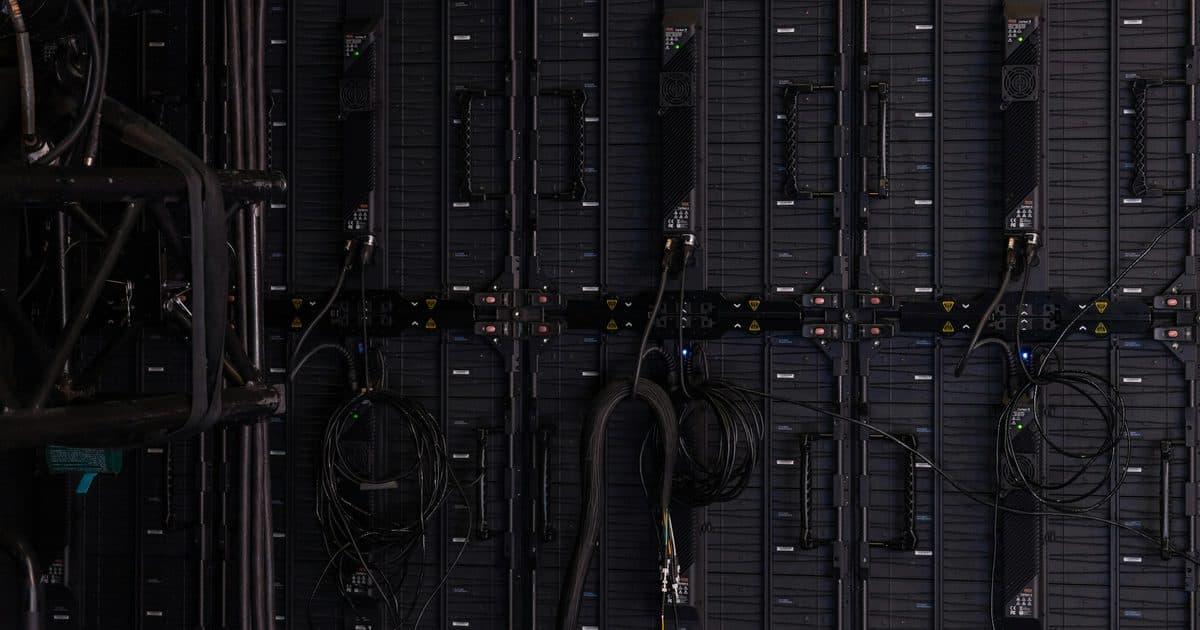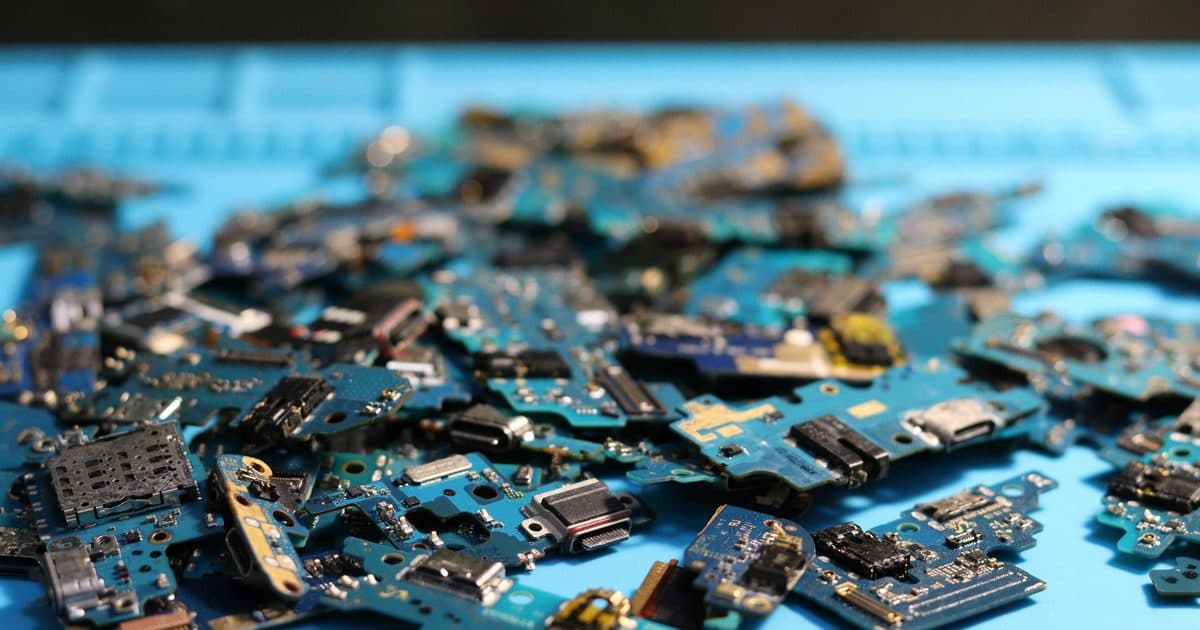
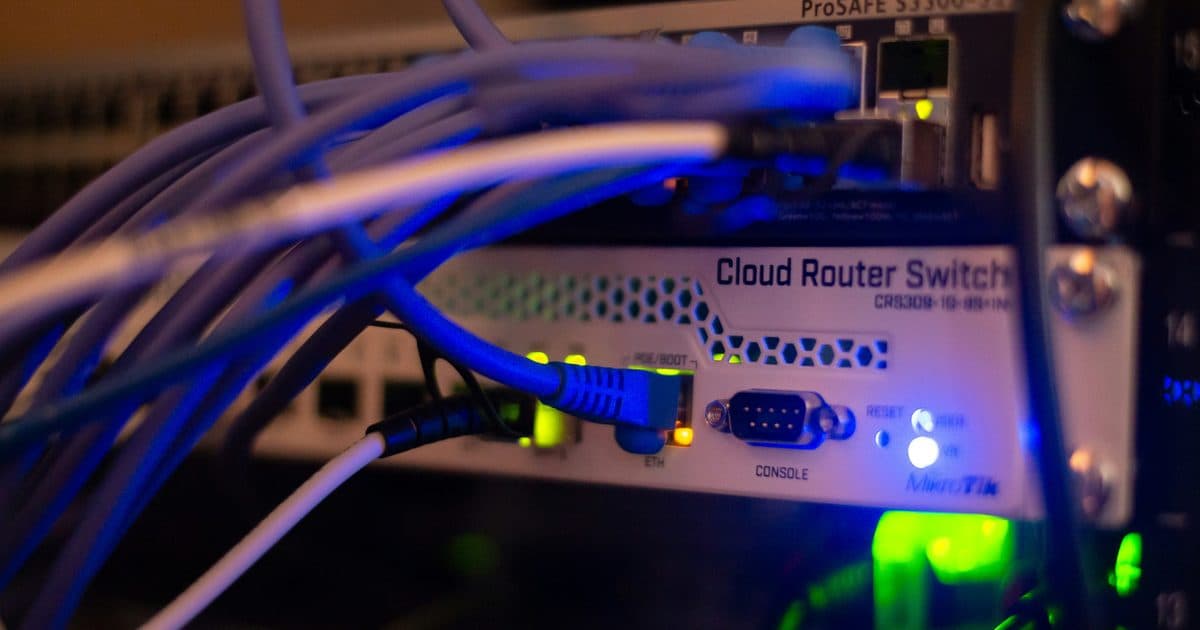
Every office, branch location, and data center has one: the network closet that nobody wants to deal with. Decommissioned switches stacked on top of each other, loose DIMMs in anti-static bags tossed into a cardboard box, last generation's access points in a pile next to a UPS that has been beeping for three months.
Most IT teams treat this closet as a graveyard. Equipment goes in, and it never comes out, at least not until a facilities manager forces the issue during a building move or lease expiration. When that day comes, the default response is a call to an e-waste hauler who carts everything away for free, or worse, charges you for the privilege.
That is a mistake. A well-stocked network closet can hold thousands of dollars in resalable IT equipment. The trick is knowing which items have value, which do not, and how to turn that pile of "old stuff" into recovered budget.
The Surprising Resale Value of Enterprise Networking Gear
While consumer tech depreciates to near zero within a few years, enterprise-grade networking hardware holds its value much longer. Businesses need compatible replacements for existing infrastructure, and buying refurbished enterprise gear at a fraction of new price makes financial sense.
Here is what you should be looking for.
Managed Switches: The Backbone of Network Closet Value
If you have pulled Cisco Catalyst switches during an upgrade cycle and stacked them in a corner, you are sitting on some of the most liquid assets in the secondary IT market. Models like the Catalyst 9300, 9200, and even the older 3850 series command strong resale prices because organizations with large Catalyst deployments need exact replacements for failed units or branch office expansions.
Cisco is not the only brand worth money. Juniper EX series switches, Arista 7000-series units, and HPE Aruba switches all have active secondary markets. The key distinction is managed versus unmanaged. A 48-port Cisco Catalyst 9300L can fetch several hundred to well over a thousand dollars depending on model and licensing. A consumer-grade unmanaged 8-port Netgear from Best Buy is worth essentially nothing.
When inventorying switches, note the model number, port count, PoE capability, and whether the unit includes the power supply and mounting hardware. PoE-capable switches command a premium because Power over Ethernet is critical for access points, cameras, and VoIP phones.
Wireless Access Points: Small Boxes, Big Value
Enterprise wireless access points are another category where people dramatically underestimate resale value. Cisco Meraki APs hold their value well because of the large installed base and ongoing Wi-Fi 6 and Wi-Fi 6E expansion.
Meraki MR series APs such as the MR46 and MR56 often resell for $150 to $400 or more depending on model and condition. Even older MR42 and MR33 units have a market because organizations running mixed-generation Meraki environments need compatible spares.
Aruba 500-series APs, Ruckus R750s, and higher-end Ubiquiti UniFi models all have active buyer demand. If these are sitting in a box gathering dust, they are losing value every month. The wireless market moves fast, and today's solid resale item becomes next year's paperweight.
Memory Modules: The $50 Bills Hiding in Anti-Static Bags
This one shocks most IT managers. Those loose DDR4 ECC DIMMs pulled during a server memory upgrade are worth real money. A single 32GB DDR4-2933 ECC RDIMM can sell for $30 to $60 on the secondary market. If you upgraded twenty servers from 256GB to 512GB each, you may have pulled 160 DIMMs worth $5,000 to $10,000 in total.
DDR5 ECC modules command even higher prices given current supply dynamics and growing demand from newer server platforms. Those are among the most valuable per-unit items in any closet.
For a deeper breakdown of how memory generation affects resale pricing, see our guide on DDR4 vs DDR5 ECC memory value.
The critical distinction: ECC registered or load-reduced DIMMs hold their value, standard desktop non-ECC RAM does not. If you see "RDIMM," "LRDIMM," or "ECC" on the sticker, it is worth selling. If it says "UDIMM" with no ECC marking, it is likely not worth the shipping cost.
Enterprise SSDs and NVMe Drives
Solid-state drives pulled from servers and storage arrays during capacity upgrades are frequently worth more than people expect. Enterprise-grade SSDs from Samsung, Intel (now Solidigm), Micron, and Kioxia hold their value because of endurance ratings and enterprise features that consumer drives lack.
A Samsung PM893 960GB SATA SSD in good health might be worth $40 to $80. Higher-capacity NVMe drives like the PM9A3 or Intel P5510 in 1.92TB and 3.84TB capacities can sell for significantly more. The key factor is drive health: the percentage of rated write endurance consumed. Drives with 90% or more remaining life are worth considerably more than drives nearing their wear limit.
If you have drives with data on them, do not let that stop you. A reputable buyer like SellMyServer.com handles certified data sanitization as part of the acquisition process.
Fiber Optic Transceivers and SFP Modules
Open a drawer in most network closets and you will find SFP, SFP+, and QSFP28 transceiver modules. These tiny components are routinely worth $15 to $100 each, and it is not unusual for a closet to contain twenty or thirty of them.
Cisco-branded SFP-10G-SR modules, Arista-compatible QSFP28s, and other brand-specific transceivers hold value because compatibility matters in production networks. A bag of thirty SFP+ modules at $30 each is $900 that most IT teams would simply throw away.
GPUs from Decommissioned Workstations
If your organization has refreshed engineering workstations, video editing rigs, or any machines used for GPU-accelerated computing, the GPUs inside them may be the single most valuable component per unit. NVIDIA Quadro and RTX professional cards, AMD Radeon Pro cards, and especially any data center GPUs like the Tesla T4 or A-series cards have enormous secondary market demand.
Even mainstream NVIDIA RTX 3080 and 4080 cards from workstation builds can sell for $300 to $700 or more. Professional-grade cards like the NVIDIA A4000 or A5000 command premium prices because of their validated driver support and ECC memory.
Got a Closet Full of Old Equipment?
Send us a list and we'll tell you what it's worth. Free quotes, no obligation, and free local pickup for qualifying lots in DFW.
Get a QuoteHow to Inventory Your Network Closet in an Afternoon
Turning that pile of equipment into a quote requires a basic inventory. You do not need barcode scanners or a certified asset tracker. A spreadsheet with four columns will do: item type, manufacturer, model number, and quantity.
Step 1: Sort by Category
Pull everything out and group it. Switches in one area, access points in another, loose memory in a bag, drives in a box. This makes counting and identifying equipment dramatically faster than trying to catalog a random jumble.
Step 2: Record Model Numbers
For switches and access points, the model number is on a label on the bottom or back of the unit. For memory modules, the part number on the DIMM sticker includes capacity, speed, and type (e.g., "M393A4K40DB3-CWE" is a Samsung 32GB DDR4-3200 ECC RDIMM). For drives, check the label for manufacturer, model, and capacity.
You do not need to decode every part number yourself. We can identify equipment from model numbers, part numbers, or even clear photographs of the labels.
Step 3: Note Condition Issues
If a switch is missing its power supply, note that. If an SSD was pulled because of a SMART warning, mention it. Honest condition reporting leads to accurate quotes. Equipment with known issues can still have component value even if it cannot be sold as a working unit.
Step 4: Check Hidden Spots
Network closets accumulate equipment in surprising places. Check the top of the rack, the shelf above the patch panel, under the raised floor tiles, and inside boxes taped shut and shoved into a corner. The most valuable items are sometimes the ones set aside "temporarily" two years ago and forgotten.
What Is NOT Worth Selling
Not everything in the closet has value, and knowing what to skip saves time for everyone.
Consumer-grade routers and switches. That Linksys router or TP-Link 8-port unmanaged switch is not worth the time to list. Consumer networking equipment depreciates to near zero almost immediately.
Non-ECC desktop RAM. Standard DDR4 or DDR3 non-ECC unbuffered memory from desktop PCs has minimal resale value. The secondary market for these modules is flooded with supply from consumer PC upgrades, and the margins are not there.
Very old managed switches. There is a cutoff point where even enterprise gear ages out. Cisco Catalyst 2960-S, 3560, and 3750 series switches are generally below the threshold of resale value today. If the switch is old enough that it has reached Cisco's end-of-support lifecycle and there are no buyers running that platform, it is recycling material.
Standard Cat5e and Cat6 patch cables. Bulk copper patch cables are worth essentially nothing on the secondary market. New cables are cheap enough that nobody buys used ones. Fiber patch cables with LC or MPO connectors have slightly more value, but only in large quantities.
CRT monitors, old keyboards, and desktop peripherals. If it came from an office desk rather than a server rack, it is almost certainly not worth selling.
The Cost of Doing Nothing
Enterprise networking gear depreciates on a curve. A Cisco Catalyst 9300 worth $800 today might be worth $500 in a year and $200 in two years as the next generation takes over. Memory modules follow the same pattern, dropping as newer generations become standard.
Every month that equipment sits in a closet, it is losing value. The tax depreciation has been taken. The warranty has expired. That pile of switches and access points is just taking up space and slowly becoming worthless.
The good news: turning network closet inventory into cash does not require an RFP process or board approval. It starts with a simple inventory and a quote request.
Turn Your Closet Cleanout Into Recovered Budget
That network closet is not a graveyard. It is a savings account that is losing interest every day. Cisco switches, Meraki access points, ECC memory, enterprise SSDs, SFP modules, and professional GPUs all have active buyer demand, and a single closet cleanout can easily recover thousands of dollars.
SellMyServer.com buys enterprise networking equipment, servers, memory, drives, and components in any quantity. We provide free quotes based on your inventory, free local pickup in the Dallas-Fort Worth metroplex, and competitive pricing based on current market conditions.
The best time to sell that equipment was six months ago. The second-best time is today. Get a quote and find out what your network closet is really worth.
Ready to Sell Your Equipment?
Get a competitive quote in under 24 hours. Free pickup for qualifying lots.
Get a Quote