SellMyServer.com

Model-specific server buyback

Sell Used Cisco UCS Servers

Cisco UCS value depends on how the server, chassis, fabric, and installed components fit together. Send the exact model, configuration export or photos, quantity, and related chassis information so the equipment can be evaluated in context.

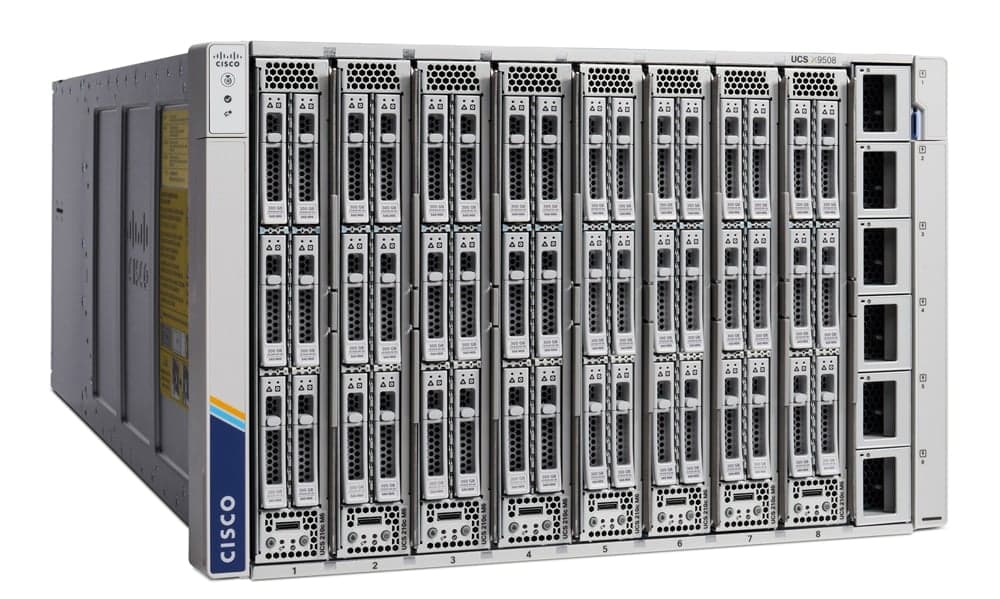
Cisco UCS X-Series server system
Complete systems or parts
Nationwide U.S. coverage
Configuration-based evaluation
Response target within 24 hours

Cisco UCS generations

Understand Cisco UCS M-Series and modular platforms

Cisco UCS model generations are tied to the exact C-Series, B-Series, or X-Series platform. A C220 M5, C220 M6, and C220 M7 are not interchangeable for valuation, so include the model suffix and the surrounding chassis or fabric equipment.

Cisco UCS generation, approximate years, common models, platform differences, and seller notes
Generation or eraApprox. yearsCommon examplesWhat changedWhat sellers should document
C-Series M3Approx. 2012–2014C220 M3, C240 M3, C460 M3Xeon E5-2600 v1/v2, DDR3, earlier Cisco IMC and storage-controller optionsComplete drive caddies, CPUs, memory, rails, and tested power supplies help distinguish reusable systems from parts-only inventory.
C-Series M4Approx. 2014–2017C220 M4, C240 M4, C460 M4Xeon E5-2600 v3/v4, DDR4, refreshed storage and PCIe expansionList the exact M4 model, storage backplane, RAID controller, CPU generation, and included rails or caddies.
C-Series M5Approx. 2017–2021C220 M5, C240 M5, C480 M5, C125 M51st/2nd Gen Xeon Scalable and AMD EPYC options, DDR4, Cisco IMC, broader NVMe and accelerator supportC240 and C480 configurations can vary widely; include risers, GPUs, drive count, storage controller, and power-supply details.
C-Series M6Approx. 2021–2023C220 M6, C240 M6, C225 M6, C245 M63rd Gen Xeon Scalable or AMD EPYC platforms, DDR4, PCIe Gen4, and updated Cisco managementIdentify Intel versus AMD systems and include PCIe risers, NVMe support, fabric context, and any UCSM or Intersight relationship.
C-Series M7Approx. 2023–presentC220 M7, C240 M7; X-Series M7 compute nodesNewer Xeon Scalable and modular UCS options, DDR5, PCIe Gen5, and current management featuresModel-specific configuration matters; provide the service label, CPU and memory inventory, storage, risers, and support status.
C-Series M8Approx. 2024–present, model-dependentC245 M8 and newer model-specific platformsCurrent AMD or Intel platform options with newer memory, PCIe, security, and management capabilitiesTreat M8 as a model-specific category rather than assuming every C-Series model has an M8 revision.

Dates are approximate market-identification windows. Model introductions overlap, and resale value depends on the exact configuration, condition, completeness, and current demand.

How to identify your Cisco UCS

  • Read the full model suffix, such as C240 M5 or C220 M7, from the front label or Cisco inventory; the C240 name alone is incomplete.
  • For B-Series and X-Series, record the compute node, chassis, fabric interconnect, fabric extender, and interconnect module models together.
  • Attach a UCS Manager, Intersight, or Cisco IMC export when available, and list missing drives, power supplies, rails, and fabric components.

What this means for your buyback quote

  • Cisco UCS value is partly a system value and partly an ecosystem value; chassis, fabric, and compute components may be more useful together.
  • M-series, B-Series, and X-Series equipment should be separated in the inventory even when it came from one project.
  • Configuration exports are often the fastest way to document CPU, memory, storage, firmware, and component completeness.

What affects the offer

The model name is only the starting point.

A complete configuration helps us determine what can be reused, resold, or routed through another disposition path. These details are especially useful for Cisco UCS lots.

  • Exact UCS model, generation, serial information, and condition
  • CPU, RAM, storage controller, drives, PCIe cards, and accelerator configuration
  • Blade chassis, fabric-related accessories, rails, power supplies, and modules
  • Quantity, location, configuration exports, and whether the equipment is part of a decommission

Prepare a better inventory

You do not need a perfect spreadsheet. A model list, photos, or a plain-language description is enough to start.

  • Attach UCS Manager exports or clear photos of model and configuration labels.
  • Include chassis, fabric, blade, and rack-server quantities together.
  • Identify missing components rather than separating them from the initial inventory.
Download the Excel asset inventory template

Common submissions

Cisco UCS platforms we evaluate

These examples are not a limit. Send the exact equipment list for a more accurate review.

UCS C220

1U rack servers across multiple generations for general-purpose enterprise compute.

UCS C240

2U rack systems with expanded storage, PCIe, and accelerator capacity.

UCS C480

High-density rack systems for larger compute, virtualization, and accelerated workloads.

UCS B-Series and X-Series

Blade servers, chassis, compute nodes, and related modular UCS equipment.

Clear evaluation

We review model, configuration, condition, quantity, location, and current secondary-market demand.

Security options

Discuss data-bearing media and sanitization requirements before equipment moves through the handoff.

Practical logistics

After an offer is accepted, we coordinate the next shipping, freight, or pickup step for qualifying lots.

Keep researching

Useful guidance for your equipment project

Start a Cisco UCS quote